Monday, May 13, 2019

A Brief of Hayek's "Road to Serfdom"

In Praise Of Hayek's Masterwork


Friedrich von Hayek first published The Road to Serfdom in 1944. His book was subsequently popularised by a condensed version in The Reader’freed
Why personal freedom is important and the threat to it
Destroy personal freedom, and ultimately the state destroys itself. No state succeeds in the long run by taking away freedom from individuals, other than those strictly necessary for guaranteeing individualism. And unless the state recognises this established fact its destruction will be both certain and brutal. Alternatively, a state that steps back from the edge of collectivism and reinstates individual freedoms will survive. This is the theoretical advantage offered by democracy, when the people can peacefully rebel against the state, compared with dictatorships when they cannot.
Nevertheless, democracies are rarely free from the drift into collectivism. They socialise our efforts by taxing profits excessively and limiting free market competition, which is the driving force behind the creation and accumulation of personal wealth and the advancement of the human condition. At least democracies periodically offer the electorate an opportunity to throw out a government sliding into socialism. A Reagan or Thatcher can then materialise to save the nation by reversing or at least stemming the tide of collectivism.
Dictatorships are different, often ending in revolution, the condition in which chaos thrives. If the governed are lucky, out of chaos emerges freedom; much more likely they face more intense suppression and even civil war. We remember dictatorships through a figurehead, a Hitler or Mussolini. But these are just the leaders in a party of like-minded statists.
When comparing dictatorships to democracy we think in terms of black and white, which allow one to express concepts clearly. But reality always comes in shades of grey. Far from being always bad, dictatorships can be successful if they permit individuals to retain the freedom to improve their lives and accumulate the benefits of their success. This is the freedom to compete, make and keep profits. A dictatorship on these lines is mercantile, offsetting the absence of political freedom by allowing personal freedom to develop within the confines of state direction. This is the current situation in China and Russia.
Modern democracy is usually flawed, a cover for the state to rob Peter to pay Paul to the point where Peter is impoverished or refuses to play the game and both the state and Paul are then bereft of funds and purpose. This is the condition to which Western democracy has evolved in modern welfare states. We can all sympathise with the underlying concept: there are those in life who through circumstances fall on hard times, and if they are given a helping hand, will eventually benefit society as a whole. But it becomes counterproductive when it discourages the individual from returning to productive society. Not only is the individual’s contribution to society lost, but he becomes a burden upon it.
For its revenue the state relies on the production of many Peters. The consequence is even more Pauls. The cost of welfare increases with its scope. It becomes welfare for all, with everyone having a right to it. Each Peter ends up funding ninety-nine Pauls. This is Mediterranean Europe today, and perhaps to a lesser extent Britain and America.
With compulsion, the state no longer protects the rights of the individual. Democracy has permitted the modern state to evolve into a separate entity no longer the servant of the population.

The cross-over between democracy and dictatorships

In economic terms, a high-spending statist democracy is indistinguishable from a dictatorship. Instead of promoting free markets, both create the conditions where commercial success is achieved by influencing the government. The difference is in the form this corruption takes. In the case of a high-spending democratic government, obtaining control over the regulatory process is vital for a business to secure market advantage and keeping competitors at bay. In a dictatorship corruption is usually more direct.
So long as free markets are not completely prohibited by the state, this crony capitalism thrives. From banks to pharmaceuticals, it is the way business is done today. It angers ordinary people, who are then persuaded by support-seeking politicians that big business is motivated by profit without social consideration, and that the socialising policies of the government are the solution. As the Austrian economist Friedrich von Hayek put it, the people are now embarking on the road to serfdom.
The Road to Serfdom was about the cross-over between democracy and dictatorships. Hayek wrote his famous book in 1942-44 (it was first published in 1944), drawing on the example of Germany’s contemporary experience. He showed how the organisation of a war-time economy by the state, in Germany’s case the First World War, becomes a template for central planning in peacetime. While Hayek showed that a government’s central planning of a war-time economy forms the template for peacetime central planning, peacetime planning also develops on its own.
The planners always promise a utopian view of the future. People are easily persuaded that planning for the benefit of everyone is an advancement on the sole motivation of profit. However, disagreements arise on what plan is best, reflected in the split between different political parties. The planners from different factions all have plans but no unity of purpose. The people disagree as well. What is needed is government propaganda to dispel disagreement and unite the people behind the government’s preferred plan.
The propaganda machine goes into action. Information is selectively fed into it to obtain public support for government policies. Statistics are manipulated to promote success and obscure failure. Any reporter who does not cooperate with the government line is excluded from the planners’ briefings, giving his rival journalists an advantage. He conforms. The use of the press to support state planning becomes increasingly important in covering up its failures.
The failures of central planning proliferate. The propaganda machine cannot cover up all the evidence, and the planners respond with even more planning, yet more suppression of personal freedom. There is no turning back. They argue it is not their fault, but the fault of the people failing to cooperate and comply with government policies. They argue that the people are uneducated and not responsible enough to have a say in central planning. What’s needed is someone strong enough to force the plans through. At the same time, ordinary people want a strong man to kick out the useless bureaucrats and make the plans work.
A new leader emerges. The democratic establishment see his function as temporary. When order in the planning process is restored, he will no longer be needed. But this is the cross-over point between democracy and a dictatorship. He is a Chavez, a Putin, a Lenin, a Mussolini, a Hitler. It was the latter fascists that were perhaps freshest in Hayek’s mind, but he was also fully aware of Lenin and Stalin.
Not all strongmen emerging from the chaos of planning failures turn out to be a Lenin or a Hitler. Those who follow a mercantilist path, contemporary examples being Russia’s Putin and China’s Xi, are careful to allow individuals the freedom to run their affairs without the heavy hand of the state. But they are also careful not to let democracy undermine their control: the people cannot have both and opponents to the state are ruthlessly dealt with.
Anyone intending to be Hayek’s strong leader promises to make order out of bureaucratic chaos. Those on the far left (in the UK, Corbin and McDonnell, in the US Bernie Sanders) believe the political solution to growing economic chaos is to take collectivism to a higher plain. Free-marketeers are derided by the planners as being antisocial, profit-seeking right-wing extremists. If Corbin and Sanders are to succeed in their desire for office, they must wish for an economic or political failure that damns capitalism and will see them swept into office.
Then what happens?
We will continue with Hayek’s narrative. The new leader uses the chaos that led to his election as the pretext to consolidate his power.Opposition is not permitted, because it restricts the leader’s ability to resolve matters. With dissenters excluded, democracy becomes little more than a propaganda exercise. The leader only permits people to vote for him and his party. To encourage national unity in the face of deteriorating economic conditions, a minority in society is made a scapegoat. With Hitler it was the relatively prosperous Jews. Corbin’s apparent dislike of Britain’s Jewish community is striking a raw nerve.
In truth, we cannot forecast what class or creed will be tomorrow’s scapegoat. It will depend on the nation, the strongman and his immediate supporters, their religious beliefs perhaps, and how rapidly planning undermines the economy. Wealthy communities with wealth for the state to acquire will be at risk. But one thing is for sure, increasing numbers of secret police will be deployed to supress all opposition. Dissent is dealt with ruthlessly.
Hayek went on to detail what we have subsequently seen, in Africa with Mugabe, in Venezuela with Chavez and then Maduro. These are the most egregious of many contemporary examples, mainly confined to developing nations. Now the mature economies in Europe, of America and Britain are drifting that way.
The current regimes in Russia and China are different, having become post-Hayekian political economies. They are mercantilist in nature. Individualism is allowed to flourish, with collectivism limited. But for these regimes to survive a wider global Hayekian transition from democracy to a lasting mercantile dictatorship, they will need to give up money-printing and return to sound money. This is our next topic.

Sound money is central to personal freedom

It has been several generations since individuals have been free to choose their own money, and people have become conditioned to state currencies. However, total control of money issuance gives enormous powers to the state which it exercises at the expense of ordinary people. In the past, the state had to face the limitations of sound money. Sound money puts a brake on the ambitions of the state. A state currency can be issued at will, which means that in nominal currency terms the potential transfer of wealth to the state through monetary inflation is infinite.
All recorded hyperinflations have been with state currencies. No politician can resist the temptations of the printing press. Politicians even justify currency debasement, saying it benefits the people by stimulating production and consumption. It becomes fundamental to the planning process, the management of the business cycle. What is not mentioned is the existing stock of money, being debased, buys less. And it is not a business cycle any more, if that ever existed, but the consequences of a cycle of credit and monetary expansion.
By issuing currency, the political class finances its ambitions without the need for raising taxes. But since there are no distinguishing features on new money compared with the old (and today it is mostly electronic anyway), the users of state currency are none the wiser. Inevitably, when more money chases the same quantity of goods, its purchasing power declines, reflected in rising prices. Governments then supress the symptoms of monetary inflation by regulating prices, or by corrupting the statistics. But so long as markets exist, these attempts always end in failure.
It is this failure to control the effects of monetary debasement that invalidates the concept of the state issuing its own currency. This is why people transacting with each other naturally select gold and silver as money – they can be sure of its value.
The monetary role of the state originally was to issue recognisable coins in gold or silver of uniform weight. When banks began to issue notes backed by gold deposits, central banks soon took over that function. They then swapped the commercial banks’ gold for balance-sheet deposits at the central bank on the promise the deposits would be repayable in gold.
Acting on behalf of the state, this was how central banks monopolised the national stocks of gold. In time, they progressively removed the promise to honour payment in gold. In the United States this happened in two steps. Ordinary people and corporations lost the freedom to own gold in 1933, then in 1971 the Americans ceased gold payments entirely.
The Americans then began a campaign to remove gold from the world’s monetary system, promoting the dollar as its replacement. The motivation was clear: the American government took to itself unlimited power to issue fiat dollars. It has used this power freely ever since.
The power to issue unlimited amounts of fiat dollars will eventually destroy the currency. The time taken for that destruction is not under the control of the government, but of its users, both domestic and foreign. We know the dollar will continually lose purchasing power so long as it is a pure fiat currency. We can also be reasonably sure that the speed of its attenuation will accelerate, particularly when the US Government attempts to finance its escalating costs in a future credit crisis. And we know a credit crisis will happen as a consequence of aggressive monetary expansion earlier in the cycle.
Every state has a fiat currency. Every state is convinced of the benefits of monetary inflation. Every fiat currency is in danger of obliteration. And as the collapse of fiat currencies progress, populations will become increasingly discontent with their planners. The demand for strong leadership, by which we mean successful planners and their parties, will see many of them elected. Most will become increasingly tyrannical. Only very few will respect the individual and personal freedom.
Money has become central to the Hayekian road to serfdom and the destruction of free markets and democracy, which is bound to lead us all into statist servitude.

Different outcomes for different states

Europe
The developed countries most blind to the dangers of losing democracy by drifting into totalitarianism appear to be in the European Union. The invention of the euro has, temporarily at least, prevented the weaker member states from drifting into hyperinflation and government bankruptcy. Political discontent is mounting in these nations, and the Brussels super-state is supressing democracy. The centralisation of the currency has taken away from these states their political control over the currency as a means of inflationary financing, but that is now vested in a centralised system. Their economic collapse and drift into extremism has only been delayed.
The cost to the rest of the Europe is a monetary hyperinflation of the euro: it has already started, only prices have yet to reflect it. The Brussels strongmen holding it all together are doing so by supressing dissent, just as Hayek predicted. Instead of a single identifiable leader, they are hidden within the entire Brussels bureaucracy. It is, perhaps, an interim arrangement, leading to the chaotic conditions of a financial and economic crisis, from which a true European leader will hope to emerge. If you want a role model for the EU, look no further than Bismarck, who unified Germany in the nineteenth century, and then employed inflationary financing before the First World War.
United Kingdom
The British electorate voted in a referendum to escape from their politicians’ grand European scheme. It has succeeded in exposing the level of separation between the state’s planned objectives and the wishes of its people. Brexit has also shown how the state strongly resists democracy. This has discredited the Conservative government, enhancing the hopes of a Marxist clique in the Labour Party. Messrs Corbin and McDonnell are actively plotting for the chaos that will lead them into power. They then hope to follow in the footsteps of Lenin, Castro and Chavez towards a communist utopia.
United states
America is fighting decay. The wise strategic planners of the past have been replaced by men in the deep state who above all fear decline. The public rebelled against the collectivism of the Democrats by electing President Trump, but it is becoming clear the public has only swapped one statist for another.
Trump quickly fell in with the deep statists and their war games. This is another central proposition of Hayek’s road to serfdom. But for Trump and his administration, war, tacit or otherwise, is not being pursued successfully and his trade protectionism risks driving America into a deepening recession.
A president elected by the people for the people and not the established state is turning out to be increasing dependent on monetary inflation, the transfer of wealth from the people to the state. Trump has tried to reverse the trend into planning and socialism, but basic economics tells us he has made the government’s future funding crisis worse. By the laws of unintended consequences, he has increased the likelihood of a future president returning to the path of collectivism.
Japan
Japan appears to be broadly immune to these Hayekian influences. Despite monetary inflation, people increase their savings, reducing the impact on prices and guaranteeing a trade surplus. For the moment, Japan is blessed with a society which is ordered and does not rebel. The conditions that lead to a dictator do not yet appear to be present.
Asia’s two super-powers
Over thirty years ago, the dictatorships of China and Russia faced a political and economic collapse and have emerged as mercantilist dictatorships. If they are wise, they will soon discard the inflationary practices of the West and return to sound money before it undermines their mercantilism. If they do this and let free markets work, they will increase their economic strength and improve the standard of living for their ordinary people. The leadership of these two nations show signs of understanding this point.

Conclusions

With Russia and China being the only two major economic powers in their current form capable of surviving the political chaos that lies on our road to serfdom, the creed of democracy in government will probably die for many generations. Eventually, we could be asked to choose between individual freedom and democracy, the model currently employed by Russia and China. The proposition will be that only a strong unaccountable administration can control the welfare demands of the majority. We will be told to get on with our lives and not to interfere in politics: we can only vote for a one-party state.
It would be a cultural shock, coming after the collapse of fiat currencies. But as we are seeing increasingly, Western democracies are little more than a sham. But it is difficult to see that the systemic and economic crisis, which we all face, will eventually allow us to return to both democracy and personal freedom.
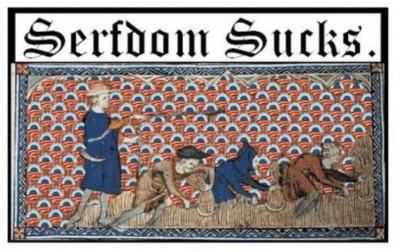
That was Hayek’s underlying point in his Road to Serfdom.

Wednesday, May 8, 2019

Students will do anything to stop Carbon Missions?

Yeah right.
Found and think great for a laugh
I recently was so moved by the student Climate Change protests across the country I decided to send all the students an email .
Attention, students. Because so many of you missed Friday’s classes, what with your little climate party and all, today I’m assigning extra work.
Let’s begin with mathematics. 558,400,000 is a really big number. Can anyone here tell me what it might represent? No?
Well, that’s the amount in tonnes of carbon dioxide that Australia emitted last year.
I’ll just pause here for a minute until Samantha stops crying. By the way, Samantha, your sign at the climate rally needed a possessive apostrophe and “planet” was spelled incorrectly, so I’m putting you back in remedial English again.

Where were we? Oh, yes. 558,400,000 tonnes of carbon dioxide.
Let’s see how we can reduce that number. Ban coal mining? That’ll knock off a big chunk.
Ban petrol-powered vehicles? Good call. That’s another slab of emissions gone.
Does the class believe we should ban all mining? You do. Interesting. For your homework tonight, I want you all to design batteries that contain no nickel or cadmium.
Good luck getting to school in electric cars without those.
And there’ll be no more steel wind turbines once the iron ore mines are closed. It’s just the price we’ll have to pay, I suppose.
Even with all those bans, however, Australia will still be churning out carbon dioxide by the magical solar-powered truckload. Cuts need to go much further.

More people means more human activity which means more carbon dioxide, so let’s permanently ban immigration. Is the class agreed?
Hmmm. You’re not quite so enthusiastic about that one. Come on, students. Sacrifices must be made.
Speaking of which, how many of you have grandparents? Not any more you don’t.
And Samantha is crying again. Can someone please take her to the school safe space and let her “process some emotions”, or whatever the hell it is you kids do in there? Thank you.
Sing along with Kim Carnes: “All the world knows of her charms/She’s got/Stop Adani arms”

Who agrees we need to simplify our lives in order to reduce emissions? Returning to earlier times, when emissions were much lower, might help save our earth.
So goodbye to air travel, the internet and your cell phones. People got by without them in the past and they’ll survive without them in our sustainable future.

Still, those emissions will be way too high. Just for fun, let’s ban Australia and see what happens.
All factories, houses, streets, farms – gone. All people gone. Every atom of human presence on this land mass, completely erased.
At that point we’ll have finally cut our emissions to nothing. We’ve subtracted an annual 558,400,000 tonnes of carbon dioxide from the atmosphere.

Congratulations, children. By eliminating Australia, you’ve just reduced the world’s yearly generation of carbon dioxide from 37,100,000,000 tonnes to just … 36,541,600,000 tonnes.
Still, every tiny reduction helps, right? Maybe not. Let’s have a quick geography lesson. Tyler, please point out China on this map. No; that’s Luxembourg. China is a bit bigger. Try over here. There you go.

Here’s the thing about China. How long will it take for China to produce the equivalent amount of carbon dioxide that we’ve slashed by vanishing Australia? One year? Two years? Five years?
Not quite. Start the carbon dioxide clock on China right now, and that one enormous nation will have matched our annual output by April 5. China adds a whole Australia to the global emissions total every twenty days.
For that matter, China will have added another 1,190,953 tonnes by the end of this one-hour class.
Even a tiny increase in China’s output puts Australia in the shade. Various experts last year estimated that China was on course for a five per cent carbon dioxide boost.
This would mean an extra 521,637,550 tonnes – or basically what Australia generates. Our total is the same as China’s gentle upswing.

So maybe your protest was in the wrong country. Here’s another assignment: write letters to the Chinese government demanding it stops dragging people out of poverty.
Make sure you include your full name and address, because the Chinese government is kind of big on keeping records. Send a photograph of yourself standing in front of your parents’ house.
You might repeat this process in India. In fact, rather than going to Europe for your next big family holiday, prevail upon your parents to visit India instead. The tiny village of Salaidih would be the perfect place to tell slum-dwelling residents they shouldn’t have electricity.
They’ll probably thank you for it. Or they should, if they aren’t stupid climate deniers. Indian paupers must avoid making the same tragic affluence mistakes as us, so we must keep their carbon footprints as tiny as possible.
Can you imagine how terrible is would be for the earth if all of India’s one billion-plus population owned cars and air-conditioners? It really doesn’t bear thinking about.
One further assignment: tonight, locate a clean, green alternative source for $66 billion in exports. That’s how much was raised last year by the Australian coal industry.
Working it out won’t be too much of a challenge, I’m sure. After all, you know science and stuff. About half of your signs on Friday claimed you know more about all these things than does the Prime Minister.
Show him how advanced your brains are by devising a brand-new multi-billion export bonanza.
Hey, look who’s back! Feeling better, Samantha? That’s nice. Feelings are the most important thing of all

Thursday, April 25, 2019

Greta Thunberg: Inconvenient Truth of Capitalism's Green Greed.

THE MANUFACTURING OF GRETA THUNBERG – FOR CONSENT: THE MOST INCONVENIENT TRUTH: “CAPITALISM IS IN DANGER OF FALLING APART” [ACT III]


January 28, 2019
By Cory Morningstar

This is ACT III of the six-part series: The Manufacturing of Greta Thunberg – for Consent: The Political Economy of the Non-Profit Industrial Complex

In ACT I of this new body of research I opened the dialogue with the observations of artist Hiroyuki Hamada:

“What’s infuriating about manipulations by Non Profit Industrial Complex is that they harvest good will of the people, especially young people. They target those who were not given skills and knowledge to truly think for themselves by institutions which are designed to serve the ruling class. Capitalism operates systematically and structurally like a cage to raise domesticated animals. Those organizations and their projects which operate under false slogans of humanity in order to prop up the hierarchy of money and violence are fast becoming some of the most crucial elements of the invisible cage of corporatism, colonialism and militarism.”

The Manufacturing of Greta Thunberg – for Consent has been written in six acts. [ACT I • ACT II • ACT III • ACT IV • ACT V • ACT VI] [Addenda: I]
In ACT I, I disclosed that Greta Thunberg, the current child prodigy and face of the youth movement to combat climate change, served as special youth advisor and trustee to the burgeoning mainstream tech start-up, “We Don’t Have Time”. I then explored the ambitions behind the tech company We Don’t Have Time.
In ACT II, I illustrated how today’s youth are the sacrificial lambs for the ruling elite. Also in this act I introduced the board members and advisors to “We Don’t Have Time.” I explored the leadership in the nascent We Don’t Have Time and the partnerships between the well established corporate environmental entities: Al Gore’s Climate Reality Project, 350.org, Avaaz, Global Utmaning (Global Challenge), the World Bank, and the World Economic Forum (WEF).
In ACT III, I deconstruct how Al Gore and the Planet’s most powerful capitalists are behind today’s manufactured youth movements and why. I explore the We Don’t Have Time/Thunberg connections to Our Revolution, the Sanders Institute, This Is Zero Hour, the Sunrise Movement and the Green New Deal. I also touch upon Thunberg’s famous family. In particular, Thunberg’s celebrity mother, Malena Ernman (WWF Environmental Hero of the Year 2017), and her August 2018 book launch. I then explore the generous media attention afforded to Thunberg in both May and April of 2018 by SvD, one of Sweden’s largest newspapers.
In ACT IV, I examine the current campaign, now unfolding, in “leading the public into emergency mode”. More importantly, I summarize who and what this mode is to serve.
In ACT V, I take a closer look at the Green New Deal. I explore Data for Progress and the targeting of female youth as a key “femographic”. I connect the primary architect and authors of the “Green New Deal” data to the World Resources Institute. From there, I walk you through the interlocking Business & Sustainable Development Commission and the New Climate Economy – a project of the World Resources Institute. I disclose the common thread between these groups and the assignment of money to nature, represented by the Natural Capital Coalition and the non-profit industrial complex as an entity. Finally, I reveal how this has culminated in the implementation of payments for ecosystem services (the financialization and privatization of nature, global in scale) which is “expected to be adopted during the fifteenth meeting in Beijing in 2020.”
In the final act, ACT VI [Crescendo], I wrap up the series by divulging that the very foundations which have financed the climate “movement” over the past decade are the same foundations now partnered with the Climate Finance Partnership looking to unlock 100 trillion dollars from pension funds. I reveal the identities of individuals and groups at the helm of this interlocking matrix, controlling both the medium and the message. I take a step back in time to briefly demonstrate the ten years of strategic social engineering that have brought us to this very precipice. I look at the relationship between WWF, Stockholm Institute and World Resources Institute as key instruments in the creation of the financialization of nature. I also take a look at what the first public campaigns for the financialization of nature (“natural capital”) that are slowly being brought into the public realm by WWF. I reflect upon how mainstream NGOs are attempting to safeguard their influence and further manipulate the populace by going underground through Extinction Rebellion groups being organized in the US and across the world.
With the smoke now cleared, the weak and essentially non-existent demands reminiscent of the 2009 TckTckTck “demands” can now be fully understood.
Some of these topics, in addition to others, will be released and discussed in further detail as addenda built on the large volume of research.

Tuesday, April 2, 2019

elements Governmentium & Administratium

A good laugh for the day. This is a cut and paste of a comment on a Brexit thread on another blog.
Just as I have done. 
“Oxford University researchers have discovered the densest element yet known to science.
The new element, Governmentium (symbol=Gv), has one neutron, 25 assistant neutrons, 88 deputy neutrons and 198 assistant deputy neutrons, giving it an atomic mass of 312.
These 312 particles are held together by forces called morons, which are surrounded by vast quantities of lepton-like particles called pillocks.

Since Governmentium has no electrons, it is inert. However, it can be detected, because it impedes every reaction with which it comes into contact.
A tiny amount of Governmentium can cause a reaction that would normally take less than a second, to take from 4 days to 4 years to complete.
Governmentium has a normal half-life of 2 to 6 years.

It does not decay, but instead undergoes a reorganisation in which a portion of the assistant neutrons and deputy neutrons exchange places.
In fact, Governmentium’s mass will actually increase over time, since each reorganisation will cause more morons to become neutrons, forming isodopes.
This characteristic of moron promotion leads some scientists to believe that Governmentium is formed whenever morons reach a critical concentration.
This hypothetical quantity is referred to as a critical morass.

When catalysed with money, Governmentium becomes Administratium (symbol=Ad), an element that radiates just as much energy as Governmentium, since it has half as many pillocks but twice as many morons.”

Western Culture Has Died A Politically Correct Death

Western Culture Has Died A Politically Correct Death
Paul Craig Roberts
Is this really happening?
It is amazing the power that politically correct kooks have acquired over language, art, and literature. It is a sign that the West is culturally dead.  
When high museums rename paintings because some emotional weakling declares the name to be offensive, it becomes obvious that the custodians of Western culture have lost their belief in Western culture. 
When universities cover up murals because of a claim they are offensive to people whose presence on the campus is miniscule if present at all, you know that learning is no longer the purpose of the university.  
When a people are afraid to use the words and terms of their forefathers, you know they have been intimidated to abandon even their own language and ways of speaking.  
Western culture today consists of pornography, sexual deviants, whining wimps devastated by mere words, self-hatred, and craven cowards afraid to stand up for themselves against the onslaught of hate directed toward them by political correctness freaks.
The political correctness people are the most alienated and emotionally weak element in the society.  Yet they dominate in the media, entertainment, universities, and art world.  How is it possible that the Washingtonians are prepared to take us to war with real people—Russians, Chinese and North Koreans—two countries that have already whipped us once—and Persians, an ancient race that even the Romans had a hard time with?  Do the fools in Washington really think that our homosexualized, feminized, transgenderized military can take on Russians, Chinese, and Persians?  Hollywood can make all the movies it wants with female superheroes, but superheroes are the last thing whining American feminists are.
The real questions for the politically correct crowd are: (1) why isn’t war politically incorrect, and (2) why isn’t it politically incorrect for the politically correct arbiters of language to call the rest of us names? The real racists in America are those who call white people racist.
What Your Sons and Daughters Will Learn at University
By Philip Carl Salzman
Universities in the 20th century were dedicated to the advancement of knowledge. Scholarship and research were pursued, and diverse opinions were exchanged and argued in the “marketplace of ideas.”
This is no longer the case. Particularly in the social sciences, humanities, education, social work, and law, a single political ideology has replaced scholarship and research, because the ideology presents fixed answers to all questions. And, although the most important thing in universities today is the diversity of race, gender, sexual practice, ethnicity, economic class, and physical and mental capability, there is no longer diversity of opinion. Only those committed to the ideology are admitted to academic staff or administration.
Universities have been transformed by the near-universal adoption of three interrelated theories: postmodernism, postcolonialism, and social justice. These theories and their implications will be explored here.
There Is No Truth; Nothing Is Good or Bad
Postmodernism: In the past, academics were trained to seek truth. Today, academics deny that there is such a thing as objective Truth. Instead, they argue that no one can be objective, that everyone is inevitably subjective, and consequently everyone has their own truth. The correct point of view, they urge, is relativism. This means not only that truth is relative to the subjectivity of each individual, but also that ethics and morality are relative to the individual and the culture, so there is no such thing as Good and Evil, or even Right and Wrong. So too with the ways of knowing; your children will learn that there is no objective basis for preferring chemistry over alchemy, astronomy over astrology, or medical doctors over witch doctors. They will learn that facts do not exist; only interpretations do.
All Cultures Are Equally Good; Diversity Is Our Strength
Our social understanding has also been transformed by postmodern relativism. Because moral and ethical principles are deemed to be no more than the collective subjectivity of our culture, it is now regarded as inappropriate to judge the principles and actions of other cultures. This doctrine is called “cultural relativism.” For example, while racism is held to be the highest sin in the West, and slavery the greatest of our historical sins, your children will learn that we are not allowed to criticize contemporary racism and slavery in Africa, the Middle East, and the equivalents in South Asia.
The political manifestation of cultural relativism is multiculturalism, an incoherent concept that projects the integration of multiple incompatible cultures. Diversity is lauded as a virtue in itself.  Imagine a country with fifty different languages, each derived from a different culture. That would not be a society, but a tower of babble. How would it work if there were multiple codes of law requiring and forbidding contrary behaviors: driving on the left and driving on the right; monogamy and polygamy; male dominance and gender equality; arranged marriage and individual choice? Your children will learn that our culture is nothing special and that other cultures are awesome.
The West Is Evil; The Rest Are Virtuous
Postcolonialism, the dominant theory in the social sciences today, is inspired by the Marxist-Leninist theory of imperialism, in which the conflict between the capitalist and proletariat classes is allegedly exported to the exploitation of colonized countries. By this means, the theory goes, oppression and poverty take place in colonies instead of in relation to the metropolitan working class. Postcolonialism posits that all of the problems in societies around the world today are the result of the relatively short Western imperial dominance and colonization. For example, British imperialism is blamed for what are in fact indigenous cultures, such as the South Asian caste system and the African tribal system. So too, problems of backwardness and corruption in countries once, decades ago, colonies continue to be blamed on past Western imperialism. The West is thus the continuing focus on anti-imperialist and anti-colonialist sentiment. Your children will learn that our society is evil, and the cause of all the evil in the wider world.
Only the West Was Imperialist and Colonialist
This ahistorical approach of postcolonialism ignores the hundreds of empires and their colonies throughout history, as well as ignoring contemporary empires, such as the Arab Muslim Empire that conquered all of the central Middle East, North Africa, southern Europe, Persia, Central Asia, and northern India, and occupied them minimally for hundreds of years, but 1400 years in the central Middle East and North Africa, and occupy them today. China, once the Communists took power, invaded Inner Mongolia to the north, Chinese Turkestan to the west, and Tibet to the south. Once in control, the government flooded these colonies with Han Chinese, in effect ethnically cleansing them. Postcolonialists have nothing to say about any of this; they wish to condemn exclusively the West. Your children will learn to reject history and comparisons with other societies, lest the claimed unique sins of the West be challenged.
Western Imperialism Was a Racist Project
Postcolonialists like to stress the racial dimension of Western imperialism: as an illustration of racism. But postmodernists are not interested in Arab slave raiding in “black” Africa, or Ottoman slaving among the whites in the Balkans, or the North Africans slave raiding of whites in Europe, from Ireland through Italy and beyond. Your children will learn that only whites are racist.
White Men Are Evil; Women of Color Are Virtuous
Social justice theory teaches that the world is divided between oppressors and victims. Some categories of people are oppressors and other are victims: males are oppressors, and females are victims; whites are oppressors, and people of color are victims; heterosexuals are oppressors, and gays, lesbians, bisexual, etc. are victims; Christians are oppressors, and Muslims are victims. Your sons will learn that they are stigmatized by their toxic masculinity.
Individuals Are Not Important; Only Category Membership Is
Social justice theory has taken university life by storm. It is the result of the relentless working of Marxist theory, adopted by youngsters during the American cultural revolution of the 1960s, then brought to universities as many of those youngsters became college professors. Marxism as an academic theory was explicitly followed by some in the 1970s and 1980s, but it did not sweep everything else away, because the idea economic class conflict was not popular in the prosperous general North American population. The cultural Marxist innovation that brought social justice theory to dominance was the extension of class conflict from economics to gender, race, sexual practice, ethnicity, religion, and other mass categories. We see this in sociology, which is no longer defined as the study of society but has for decades been defined as the study of inequality. For social justice theory, equality is not the equality of opportunity that is the partner of merit, but rather equality of result, which ensures the members of each category at equality of representation irrespective of merit. Your sons will learn that they should “step aside” to give more space and power to females. Your daughters, if white, will learn that they must defer to members of racial minorities.
Justice Is Equal Representation According to Percentages of the Population
As there is allegedly structural discrimination against all members of victim categories, in order for equality of result to prevail, representation according to percentages of populations must be mandated in all organizations, in all books assigned or references cited, in all awards and benefits. Ideas such as merit and excellence are dismissed as white-male supremacist dog whistles; they are to be replaced by “diversity” of gender, race, sexual preference, ethnicity, economic class, religion, and so on. (Note that “diversity” does not include “diversity of opinion”; for only social justice ideology is acceptable. Any criticism or opposition is regarded as “hate speech.”) Academic committees now twist themselves into pretzels trying to explain that “diversity is excellence.”
Members of Oppressor Categories Must Be Suppressed
Of course, the requirement of representation according to population applies only one way: to members of victim classes. If whites, men, heterosexuals, Christians, etc. are underrepresented, that is fine; the fewer the better. For example, females now make up 60% of university graduates, although in the general age cohort males are 51%. There is no social justice clamoring for males to be fully represented.  Members of disfavored oppressor categories are disparaged. The classics of Western civilization should be ignored because they are the work, almost exclusively, of “dead white men.” Only works of females, people of color and non-Western authors should be considered virtuous. So too in political history. The American Constitution should be discarded because its writers were slaveholders.
Victims of The World Unite!
“intersectionality” is an idea invented by a feminist law professor. It argues that some individuals fall into several victim categories, for example, black, female lesbians have three points in the victim stakes, as opposed to male members of the First Nations who receive only one point. Further, on the action front, members of each victim category are urged to unite and ally with members of other victim categories, because sharing the victim designation is the most important status in the world. This leads to some anomalies. Black victims of racism are urged to unite with Arab victims of colonialism, even though Arabs have been and still are holders of black slaves.
Being Educated Is About Being on The Right Side
As Karl Marx said, “The philosophers have only interpreted the world in various ways. The point, however, is to change it.” The objective of a university education today is to ensure that students chose “the right side” in changing the world. The idea that it probably makes sense to try to understand the world before attempting to change it, is rejected as outmoded, modernist empiricism and realism, now superseded by postmodernism and social justice. If there is no Truth, and whatever one feels or believes is one’s truth, then trying to gain an objective understanding of the world is futile.
Things you are not allowed to say anymore.